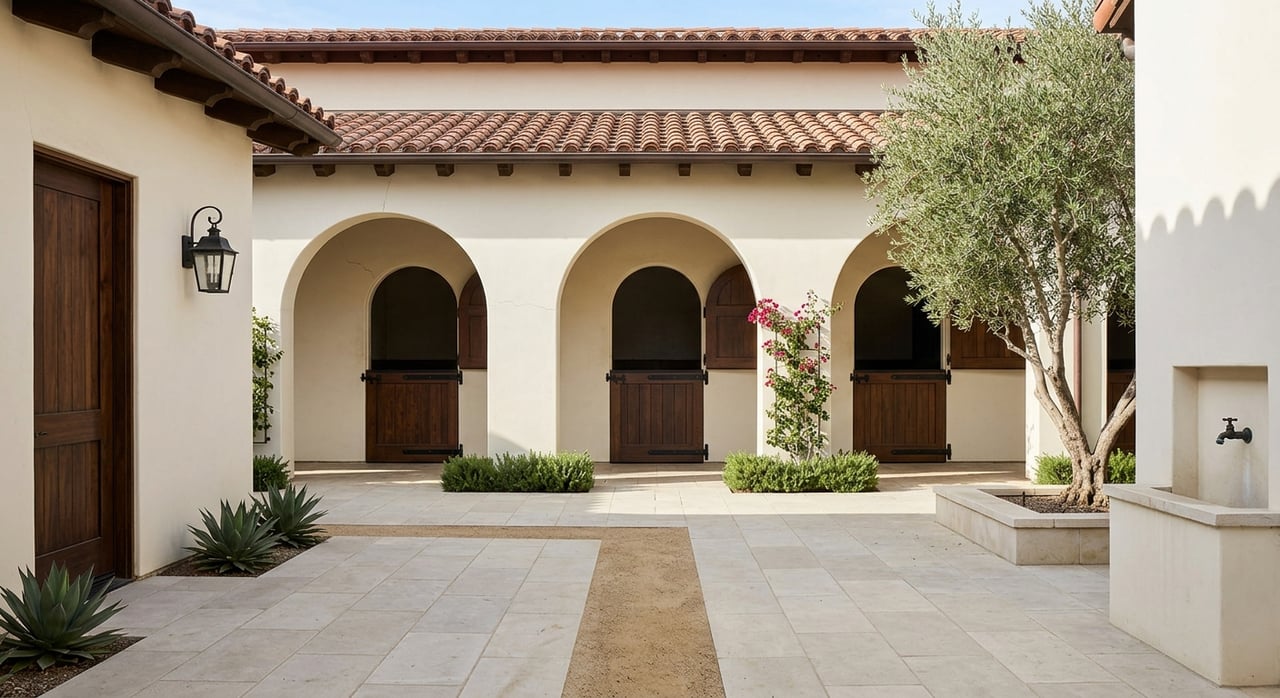
Rancho Santa Fe Equestrian Properties Buyer Guide
May 14, 2026
May 14, 2026
If you are searching for an equestrian property in Rancho Santa Fe, you are not just buying a home with extra land. You are buying into a very specific horse lifestyle shaped by trails, property rules, lot size, and how the land actually functions day to day. A beautiful estate can look horse-ready at first glance, but the real value often comes down to access, layout, and permitted use. This guide will help you understand what matters most so you can shop with more confidence. Let’s dive in.
Rancho Santa Fe has long been known for its equestrian appeal, especially within the Covenant. According to the Rancho Santa Fe Association, the Covenant includes nearly 60 miles of private equestrian and pedestrian trails for residents and their guests. That trail network is a major part of the lifestyle and one of the clearest reasons buyers target this area.
This is not simply open space with a few riding paths. The Association’s published rules make it clear that horses come first on these trails. For many buyers, that horse-first culture is what makes Rancho Santa Fe different from other luxury markets with larger lots but less structured equestrian access.
The Association also describes Osuna Ranch as its horse boarding and training facility, with barns, stables, arenas, paddocks, and pastures. That adds another layer of convenience for buyers who want access to established equestrian infrastructure within the community.
When you compare equestrian properties in Rancho Santa Fe, one of the first questions to ask is simple: Is the property inside the Covenant or just nearby? That distinction can affect trail access, property use, and the overall riding experience.
Inside the Covenant, the trail system is a meaningful lifestyle benefit. The Association says the trails are used exclusively by Covenant residents and their guests, and many sections are wide enough for two riders side by side. For buyers who plan to ride regularly, direct or practical access to that network can be just as important as the home itself.
A large parcel outside the Covenant may still be attractive and horse-friendly, but it may not offer the same managed riding network. That is why two properties with similar acreage and home size can deliver very different equestrian value.
Not every estate with land, fencing, or a barn is truly set up for horses. Some homes are better described as horse-friendly, while others are fully horse-ready. Knowing the difference can save you time and help you focus on properties that fit your goals.
A horse-ready property usually includes real working infrastructure. In current and recent Rancho Santa Fe listings, that can mean features such as multiple stalls, grass pastures, a round pen, a dressage court or arena, a hay barn, groom’s quarters, and water storage systems.
For example, a pending Rancho Santa Fe listing at 15731 Via De Santa Fe advertises 8 stalls with room to expand to 10, four grass pastures, a round pen, a full dressage court, an arena viewing deck, groom’s quarters, a hay barn, and a well system with a 3,750-gallon storage tank. Another Covenant estate at 5631 El Camino Del Norte includes an 8-stall barn, riding arena, round pen, four-horse walker, and direct Covenant trail access.
Those examples show why buyers should look beyond marketing language. A parcel may have a barn but very little usable turnout area. It may have a riding ring with footing that needs work, or acreage that appears generous on paper but is limited by slopes, setbacks, easements, or trail constraints.
If you are buying inside the Covenant, the Rancho Santa Fe Regulatory Code is essential reading during due diligence. Chapter 40 requires an animal keeping permit from the Art Jury before horses or bovine cattle may be kept on the property. That means horsekeeping is not automatic, even when the lot appears suitable.
The code also sets a minimum lot size of two gross acres for keeping horses on Residential Property. In addition, Residential Property is limited to one animal per gross acre. For buyers, that creates a direct link between lot size and how many horses may be allowed.
The Covenant rules are also clear about use. Horsekeeping on Residential Property is for the owner’s personal pleasure and benefit, and commercial uses such as horse training schools, boarding or breeding stables, riding clubs, and horse shows are prohibited on Residential Property.
Another important rule involves the relationship between the horses and the residence. The code says no horses may be kept unless an occupied residence exists on the property or within contiguous single ownership, subject to Art Jury review. Barns, stables, corrals, paddocks, and related facilities must also follow separation requirements under the code.
Outside the Covenant, San Diego County rules become especially important. County Planning & Development Services defines horsekeeping as the private keeping of horses by owners or occupants and treats it as an agricultural use. Commercial horse stables are treated separately.
The county says private horsekeeping is allowed on most properties without a permit. Commercial horse stables may require different levels of review, depending on the number of horses and the intensity of the operation.
The county’s tiered permitting path includes:
One of the biggest points of confusion for buyers is the acreage standard. In the Covenant, the code uses gross acreage. In county equine permitting, the standard may rely on usable acreage. That difference can have a major impact on what the property can actually support.
Equestrian purchases in Rancho Santa Fe require a more detailed review than a standard home search. The home may be stunning, but your long-term experience will depend on whether the property supports your intended use.
Here are some of the most important questions to ask:
These questions sound practical because they are. In an equestrian purchase, details about operations and land use often matter just as much as design, finishes, or square footage.
Rancho Santa Fe sits in a wildland-urban-interface environment, so fire planning is a real part of owning larger land parcels and horse facilities. The Rancho Santa Fe Fire Protection District says its fire code includes wildland requirements, vegetation-management and weed-abatement rules, and International Urban-Wildland Interface Code provisions intended to reduce wildfire spread.
For equestrian buyers, that means upkeep is more than routine maintenance. Pastures, perimeter areas, outbuildings, and access routes all need to be evaluated through the lens of ongoing property management. If you are comparing properties, ask how the current owner has handled vegetation control and site maintenance.
Rancho Santa Fe is a premium market, and equestrian properties often sit at the upper end of local pricing. North San Diego County REALTORS®’ April 2026 rolling 12-month reports show a detached median sales price of $4.895 million in 92067 and $3.175 million in 92091. Average sales prices were $5.72 million in 92067 and $3.66 million in 92091.
Inventory also differs by area. The same reports show 83 homes in inventory and 5.7 months of supply in 92067, compared with 10 homes and 6.4 months of supply in 92091. That matters because your options, competition, and timing may look very different depending on which part of Rancho Santa Fe you are targeting.
Based on current horse-ranch listings, a practical market observation is that equestrian properties often fall into rough pricing bands:
This is not an official market classification, but it is a useful planning tool. It helps set expectations about what level of horse infrastructure and land utility you are likely to see at different price points.
The best Rancho Santa Fe equestrian purchase is not always the largest home or the most dramatic listing. It is the property that matches the way you actually plan to live and ride. If you want private horsekeeping for personal use, your priorities may be different from a buyer who mainly wants trail access and a small barn setup.
A smart search starts with clarity. Decide how many horses you plan to keep, whether direct trail access matters, how much infrastructure you need today, and whether you are comfortable upgrading facilities after closing.
Once those priorities are clear, it becomes much easier to separate true equestrian opportunities from general luxury estates with horse appeal. That is where local guidance can make a big difference, especially in a market where rules, land use, and lifestyle value all intersect.
If you are exploring equestrian properties in Rancho Santa Fe and want a clear, local perspective on the options, Jorge Alvarez can help you evaluate the land, lifestyle fit, and market positioning with the attentive, high-touch service buyers expect in this part of San Diego.

We are committed to providing personalized attention and tailored solutions that align with your specific real estate goals. Whether you are buying, selling, or investing, we ensure a smooth and satisfying experience.